The Climate Success Story Nobody's Talking About
Emissions are falling four times faster than they were two decades ago. The targets are rising even faster.
So, get this: 2024 was Europe's warmest year ever recorded! Unprecedented floods hit eastern regions. Meanwhile, the south experienced its driest summer in 12 years. Climate change has become a major source of economic and social disruption.
But beneath these weather reports lies an industrial success story. The European Union's energy system is undergoing a structural transformation that has begun to decouple economic prosperity from carbon emissions. The recently released EEA Trends and Projections 2025 report shows a continent moving at unprecedented pace. And as any strategist knows, the faster you run, the more the remaining inefficiencies get exposed.
Here are the five findings that define where Europe stands.
The Great Decoupling: Growth No Longer Requires Carbon
For decades, the prevailing economic myth held that sustainability killed growth. The 2025 data puts that argument to rest.
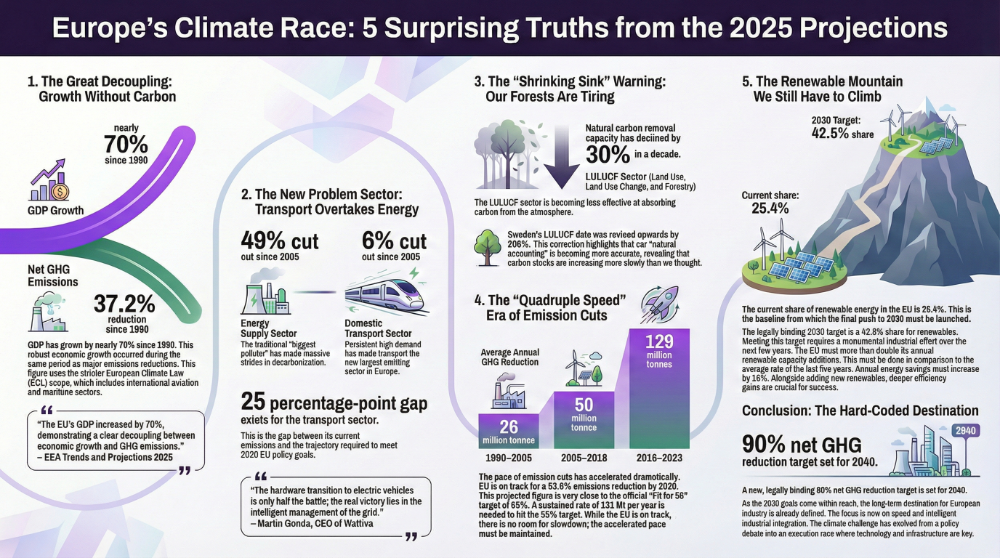
Since 1990, the European Union's GDP has grown by nearly 70%. During that same period, net greenhouse gas emissions fell significantly. Wealth creation can be divorced from environmental waste.
The nuance lies in scope. Looking strictly at domestic emissions, the EU has achieved a 39% reduction. The more rigorous metric is the European Climate Law (ECL) scope, which includes international aviation and maritime sectors. Even by this stricter standard, the reduction stands at 37.2%.
"While GHG emissions fell substantially, the EU's GDP increased by 70%, demonstrating a clear decoupling between economic growth and GHG emissions." — EEA Trends and Projections 2025
The Sectoral Flip: Transport Has Become the Problem
In the early 2000s, the villain was energy production. Massive coal-fired power plants fueled the continent and its emissions. That hierarchy has flipped.
The energy supply sector has slashed emissions by 49% since 2005. Domestic transport? A marginal 6% reduction. Transport now claims the title of Europe's largest emitting sector. Despite efficiency gains in vehicle hardware, persistent high demand has created a 25 percentage point gap between current transport emissions and the 2030 trajectory required by EU policy.
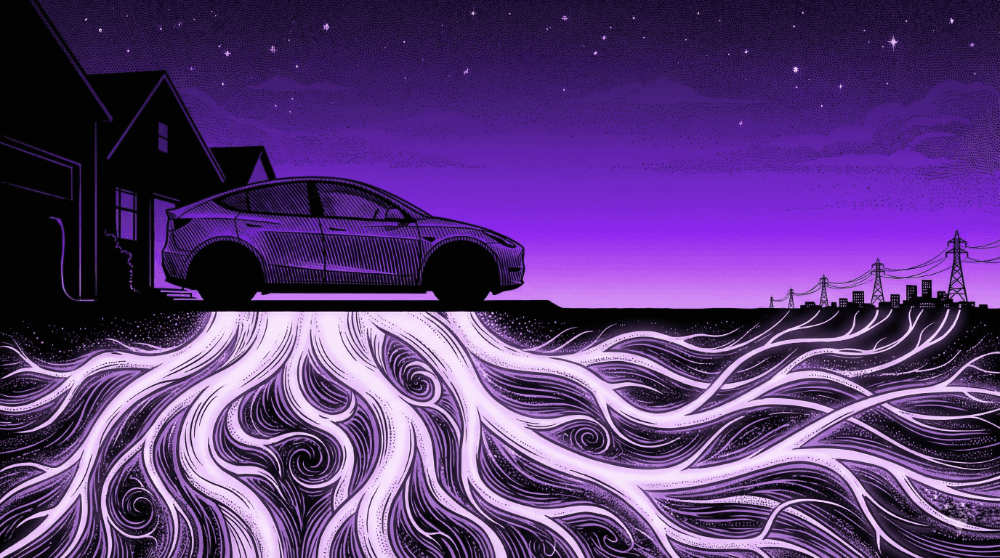
Solving this requires moving beyond EV sales to digital integration of energy and mobility sectors. As Martin Gonda, CEO of Wattiva, puts it:
"The hardware transition to electric vehicles is only half the battle. The real victory lies in intelligent management of the grid. As transport becomes our largest emitting sector, a robust DERMs platform is the digital backbone required to turn every EV into a flexible asset for a decarbonized Europe."
The Shrinking Sink: Our Forests Are Losing Capacity
One of the most concerning findings involves our natural environment. We're getting better at cutting what we emit, but our land is becoming less effective at removing what remains.
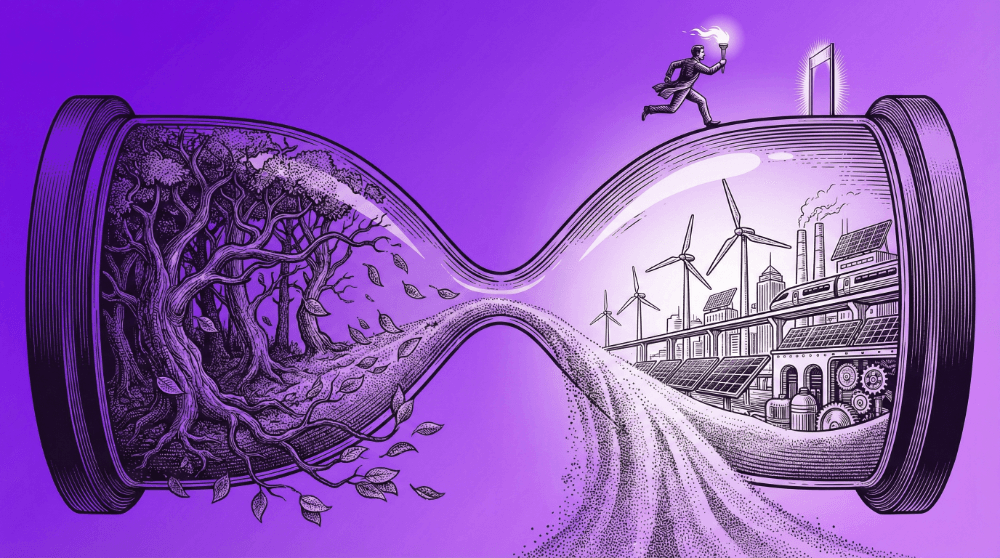
The Land Use, Land Use Change, and Forestry (LULUCF) sector acts as a natural carbon sink. Its removal capacity has declined by an average of 30% over the last decade.
Sweden brought this into sharp focus when it revised its 2023 LULUCF net removals upward by 208% following methodological updates for mineral soils and biomass. Our natural accounting is becoming more accurate, and the results show that carbon stocks are increasing more slowly than assumed. Climate stress and soil degradation are weakening existing natural infrastructure. Planting new forests won't solve a problem when current forests are losing their strength.
The Quadruple Speed Era
The acceleration is measurable. The average annual reduction in emissions has increased dramatically over the decades: from 26 million tonnes per year between 1990 and 2005, to 50 million tonnes per year between 2005 and 2018, and then to 129 million tonnes per year between 2018 and 2023. This jump in velocity means the "Fit for 55" goal is now a mathematical probability. Current projections suggest the EU is on track for a 53.9% reduction by 2030 (ECL scope).
This is not a guaranteed win. To hit the 55% finish line, Europe must maintain a sustained reduction rate of 131 Mt per year every year until 2030. That's the current pace, held constant for six years.
The Renewable Mountain Still to Climb
As of 2024, the share of renewable energy in the EU stands at 25.4%. The binding target for 2030 is 42.5%. In practice, the EU must double its annual capacity additions compared to the average of the last five years. At the same time, annual energy savings must increase by 16% over the previous five-year average.
This means overhauling heavy industry and deep-sea shipping, sectors where the solutions are both technically demanding and capital-intensive. The low-hanging fruit of the transition has been picked.
Conclusion: Vanishing Margins
The 2025 projections show that the EU is largely on track, but there is no room for error. We have decoupled wealth from waste. Many economists thought this would be impossible thirty years ago. However, the goalposts are already moving. In November 2025, EU environment ministers reaffirmed a new, legally binding interim milestone: a 90% net GHG reduction target by 2040.
The question has shifted. Europe has proven that it can change its energy source. Can it accelerate digital and physical infrastructure fast enough to manage a 90% reduction? The transition has moved from policy debate to industrial execution. Speed and intelligent integration are the variables that matter now.